
Beat Anxiety: Breathing Fresh Air and Deep Diaphragmatic Breathing

For women, especially those managing a high-stress load, the tendency is to breathe shallowly and fast. This pattern is directly linked to increases in anxiety and an elevated heart rate. We need to break this cycle and restore calm.
This guide dives into the essence of your Week 2 challenge: Breathe Fresh Air into your lungs and practice deep breathing to strengthen your lungs and calm your mind.
The Life-Changing Benefits of Deep Breathing
Shallow, chest-only breathing is a common habit, especially among high-achievers who are often stuck in a persistent emotional feeling of "fight, flight, or freeze"—that chronic anxiety. Deep breathing is the direct link to disrupting this cycle and restoring internal peace.
Shallow breathing is linked to increases in anxiety and elevated heart rate. This can quickly cause a panic attack to individuals who are over-sensitive to their breathing rate. Individuals who practice deepening their breath into the lower part of the lungs often reduce the stress hormones, increase oxygen to the brain, and overall improve their mental health. By slowing the out-breath the heart rate decreases and a sense of relaxation can begin. Connect calming thoughts and a person can improve their mental functioning and resilience to stressful situations. Check out this article for some additional scientific details.
Over time shallow breathing can lead to weakened lungs and diaphragm–the major muscle that contracts and pulls the air into your lungs. A lifetime of shallow breathing can result in a very weak breath which increases the risk of dying from pneumonia. This is one of the major causes of death in older individuals who have multiple chronic health conditions they are managing. This doesn't sound like fun so let's make it a habit to breathe deeply and strengthen your diaphragm. Bonus points: it also helps improve your posture.
Why Deep Breathing Matters (Mind & Body)
Anxiety Reduction: Deep, intentional breathing reduces stress hormones and helps combat anxiety and elevated heart rate.
Disease Prevention: It works to prevent diseases like COPD, lower respiratory infections (like Pneumonia), and reduces the severity of Asthma.
Nervous System Reset: By slowing your out-breath, you stimulate the vagus nerve, which directly decreases your heart rate and signals your nervous system that it is safe to relax.
Cognitive Boost: Increasing the oxygen to the brain can help improve memory, cognitive function, and productivity.
Lung Health: Deep breathing strengthens the lungs and diaphragm, lowering the risk of death from pneumonia, a major cause in older individuals.
Emotional Resilience: Connect calming thoughts with your deep breath, and you can improve your mental functioning and resilience to stressful situations.
Clean Air: An Essential Element of Wellness
We don’t think about air quality often in our daily lives, but it is a very important element of our wellness. We exist in the air we breathe, and so, do not notice what our daily environment really looks like unless we travel to a different place. Then we might notice something is different: a salty smell by the sea or a pollution haze in a big city. When we climb a high mountain, the oxygen concentration gets lower, and we have to breathe more rapidly to function. Everything gets harder. Thinking and moving is harder unless you have acclimated to the altitude. Unfortunately, we don’t acclimate well to polluted air. If you check out NOAA they state that,
“Poor air quality is responsible for an estimated more than 100,000 premature deaths in the United States each year. Costs from air pollution-related illness are estimated at $150 billion per year.”
It is important to note that a great deal of suffering goes unaccounted for in humans and our entire planet. Indoor air quality is included here and can often be just as bad, if not worse. Check out the NIH for all the details. In summary, chemicals, cleaners, molds, and stale air in our homes can also cause us many health issues including respiratory diseases, allergies, mental health problems, cognitive decline, and cancer. Changing global problems on an individual level is almost impossible, so we won’t spend time here discussing the global changes that need to be made. However, we can make minor improvements by growing house plants indoors, paying attention to the products we bring home, and using good-quality air filters in our fans and furnaces. We can also plan to get outside in natural settings daily–where we are surrounded by plants and natural sunlight. Spending 15 minutes a day breathing deeply in such places can reduce anxiety, strengthen your lungs, improve mental focus, reduce fatigue, and boost your motivation.
The Unseen Cost of Poor Air
Poor air quality is responsible for an estimated more than 100,000 premature deaths in the United States each year, with costs from related illness estimated at $150 billion per year. Indoor air quality can be just as bad, if not worse, due to chemicals, cleaners, molds, and stale air. This can cause health issues including respiratory diseases, allergies, mental health problems, cognitive decline, and cancer.
Simple Steps to Improve Your Air Quality:
Indoor Improvements: Make minor improvements by growing houseplants indoors, paying attention to the products we bring home, and using good-quality air filters.
Go Outside Daily: Plan to get outside in natural settings daily, where you are surrounded by plants and natural sunlight. Spending 15 minutes a day breathing deeply outside can reduce anxiety, strengthen your lungs, reduce fatigue, and boost your motivation.
How to Practice Deep Diaphragmatic Breathing
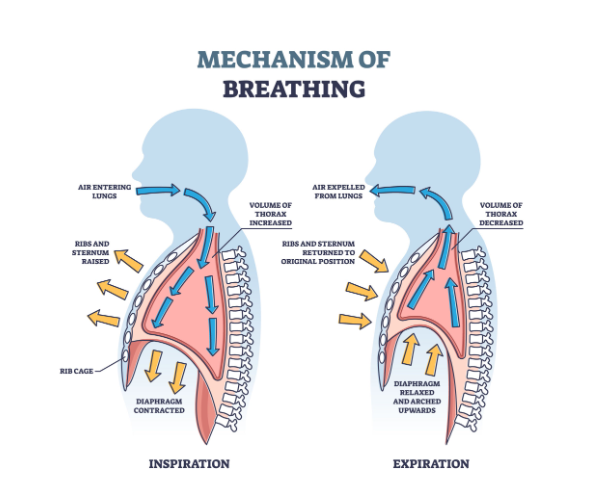
Diaphragmatic, or "belly," breathing is the key to getting oxygen-rich air deep into the lower parts of your lungs, where oxygen exchange is most efficient.
The Technique:
Find Your Posture: Lift your sternum up, pull your shoulders back and make room for your diaphragm to expand down into your belly. (Bonus points: this also helps improve your posture.)
Expand the Ribs: Slowly allow your ribs to expand outward. You can place your hand on the side of your ribs to feel the movement and focus your mind.
The Diaphragm: The diaphragm is a dome-shaped muscle that flattens downwards when it contracts, pushing the stomach out in front as the lungs fill with air. The lungs’ capacity is rarely reached in normal breathing, but focusing allows you to get oxygen-rich air deep into the lower parts of the lungs, where there is more surface area for oxygen to pass into the bloodstream.
Slow the Exhale: Focus on deepening the air into the lower parts of the lungs and slowing down your exhale. This allows more time for the oxygen to exchange with carbon dioxide, making the breath more efficient, while also slowing the heart-rate and decreasing blood pressure.
Somatic Calm: All of these small signals reach the brain and begin to downshift the release of stress chemicals. With practice, you can reverse anxiety symptoms such as tension in the neck, shoulders, and abdomen, and slow down overthinking.
Your goal is to build consistency and train your nervous system:
Set an alarm to practice deep, mindful breathing for 1–3 minutes, three times per day. If possible, spend 10–20 minutes outside in a natural environment.
This challenge is simple, but powerful. We're training your body and mind to gently work together.
Your Next Step: Integrating Somatic Calm
The power of somatic breathing is that it is your most direct link to internal peace. If chronic anxiety has left you feeling disconnected from your body, or if you struggle to find the time for these practices, the ZenHikr Challenge is designed specifically to integrate mindful breathing with gentle movement, providing a guided, actionable path to deep, somatic calm.
